🌫️ Quick Summary: The Haunting Poetry of Silent Hill 2
More than two decades after its original release—and reignited by Bloober Team’s critically acclaimed remake—Silent Hill 2 remains the crowning pinnacle of psychological horror in video games. Unlike typical horror stories built on cheap jump scares, Silent Hill 2 frightens through unbearable melancholy, unresolved grief, and deep existential guilt. From Mary’s heartbreaking letters to Angela’s terrifying revelation on the burning staircase, every line spoken in the fog carries profound emotional weight. Below is the ultimate collection of iconic Silent Hill 2 quotes, complete monologue transcripts, environmental graffiti meanings, and an interactive trivia quiz.
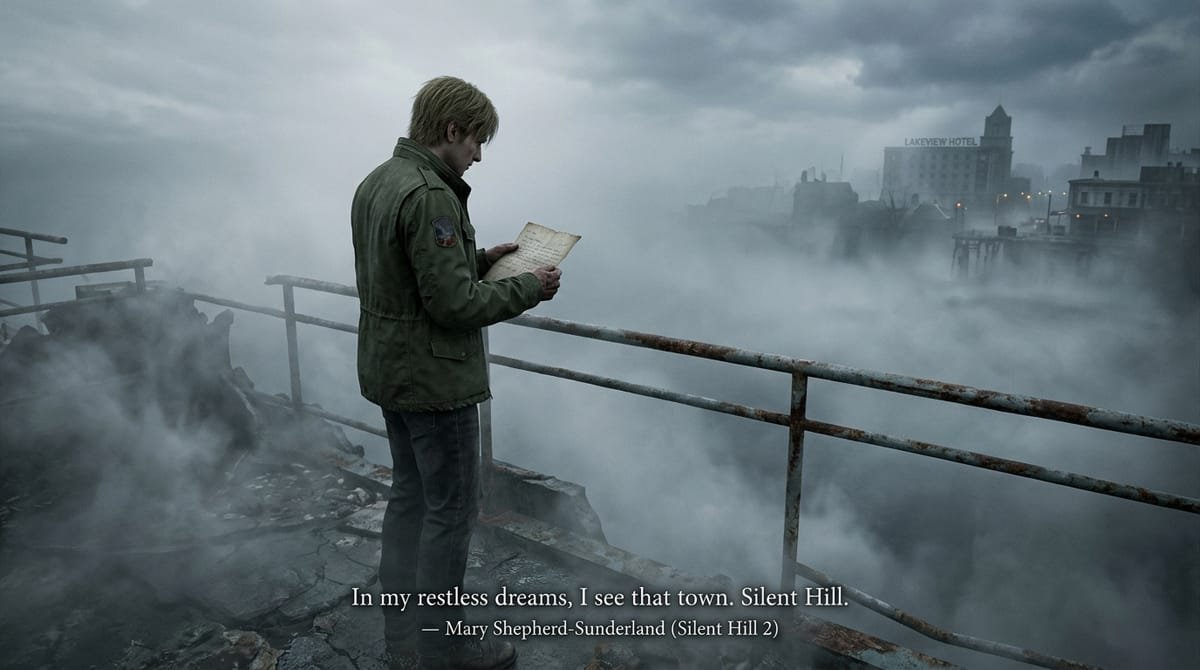
Table of Contents
- 1. Mary’s Letter: Opening Monologue & Full ‘Leave’ Ending Script
- 2. Angela Orosco: The Burning Staircase & Trauma in the Fog
- 3. James Sunderland: Guilt, Denial & Confronting Pyramid Head
- 4. Pyramid Head & The ‘There Was a Hole Here’ Graffiti
- 5. Maria: The Seduction of the Doppelgänger (“See? I’m Real”)
- 6. Eddie Dombrowski: The Descent into Violent Psychopathy
- 7. Short Silent Hill 2 Quotes (For Captions & Statuses)
- 8. Interactive Silent Hill 2 Trivia Quiz
- 9. Frequently Asked Questions (FAQ)
1. Mary’s Letter: Opening Monologue & Full ‘Leave’ Ending Script
The catalyst for the entire narrative is a letter sent from a dead woman. Mary Shepherd-Sunderland died of a terminal illness three years prior—yet James receives an envelope bearing her handwriting, summoning him back to the foggy lakeside resort town where they once spent their vacation.
“In my restless dreams, I see that town. Silent Hill.”
“You promised you’d take me there again someday. But you never did.”
“Well, I’m alone there now… In our ‘special place’… Waiting for you…”
“When I first learned that I was going to die, I just didn’t want to accept it. I was so angry, so terrified. I lashed out at everyone I loved… especially you, James.”
“Whenever you came to see me, you were always so kind. But I knew you were suffering too. I became ugly, pathetic… I hated what I had become, and I took it all out on you.”
“James… I don’t want you to carry this guilt anymore. You gave me so much. You made me happy.”
“James… You made me happy.”
2. Angela Orosco: The Burning Staircase & Trauma in the Fog
While James’s manifestation of Silent Hill is damp, rotting, and suffocated in mist, nineteen-year-old Angela Orosco experiences the town as a searing, inescapable inferno born from years of severe sexual and physical abuse at the hands of her father and brother.
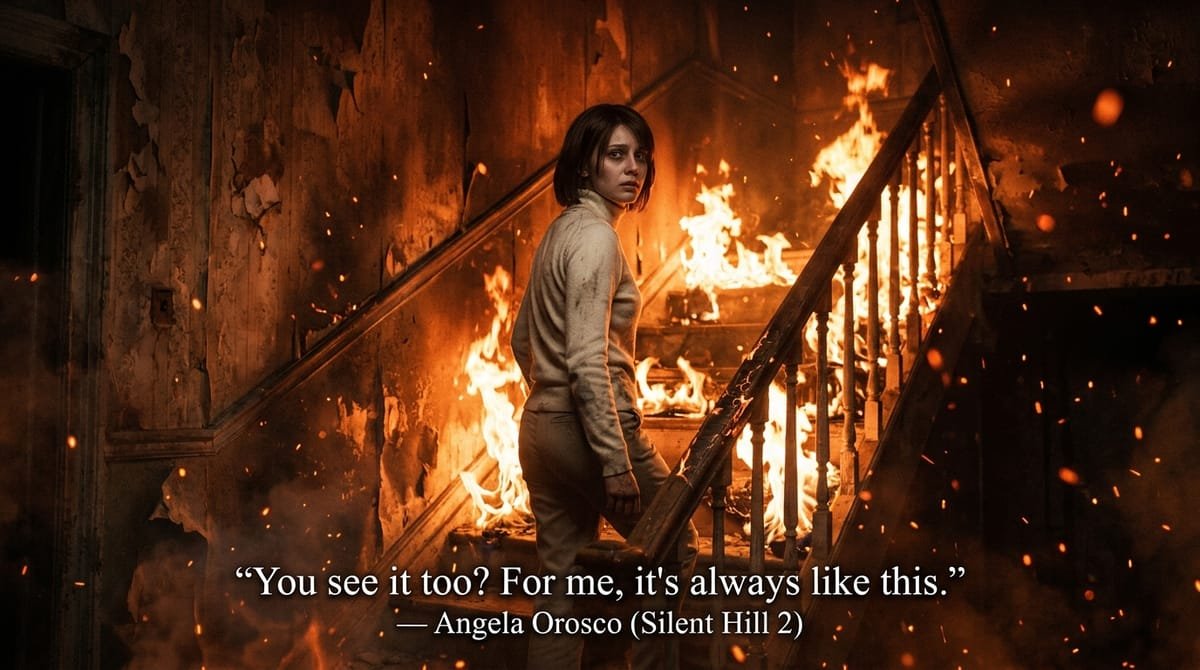
Context: The Burning Staircase Scene
“You see it too? For me, it’s always like this.”
Context: Labyrinth Room Confrontation
“Or maybe… you think you can save me? Will you love me? Take care of me? Heal all my pain? …That’s what I thought. James… give me back that knife.”
3. James Sunderland: Guilt, Denial & Confronting Pyramid Head
James Sunderland begins his journey as an everyday, sympathetic widower searching for his lost wife. But as the town peels away his delusions, we discover that James smothered Mary with a pillow to end her agony—and his own burden.
Context: Final Pyramid Head Encounter
“I was weak. That’s why I needed you… needed someone to punish me for my sins. But that’s all over now. I know the truth. Now it’s time to end this.”
Context: Hotel Room 312
“Mary’s dead. I killed her.”
Context: Cemetery Introduction
“You’d better not. Killing yourself… it isn’t the way out.”
4. Pyramid Head & The ‘There Was a Hole Here’ Graffiti
Pyramid Head (known in development as The Red Pyramid Thing) never speaks a single word. He doesn’t need to: his drag of the Great Knife and brutal executions communicate absolute, unwavering condemnation.
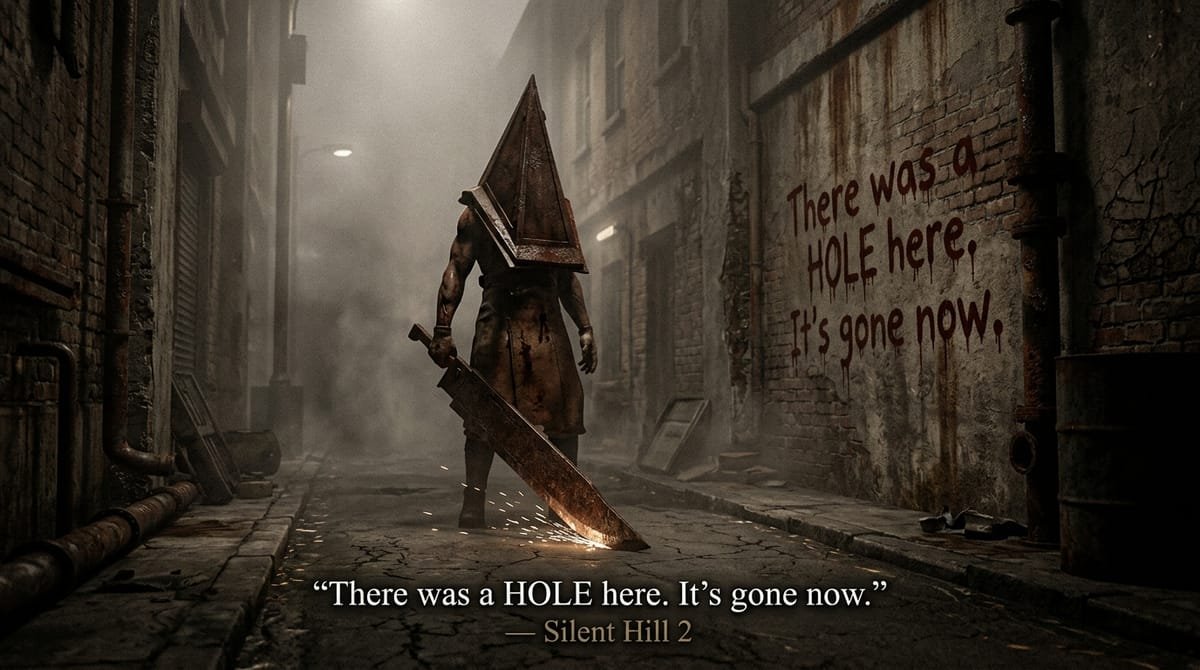
Instead, the town speaks for him through chilling environmental messages painted across walls, mirrors, and bar windows:
Context: Neely’s Bar Window
“There was a HOLE here. It’s gone now.”
Context: Otherworld Wall Inscription
“If you really want to see Mary, you should just DIE. But you might be heading to a different place than MARY, James.”
5. Maria: The Seduction of the Doppelgänger (“See? I’m Real”)
Born from the spiritual power of the town catering to James’s subconscious desires, Maria is Mary’s sensual, assertive, and provocative shadow. She exists to tempt James away from confronting his crime:
Context: Rosewater Park Meeting
“I’m not your Mary. …Aren’t I what you wanted?”
Context: Labyrinth Cell Interaction
“See? I’m real. …I’m right here.”
Context: Hospital Basement Elevator
“Anyway? What do you mean ‘anyway’?! You don’t care about me at all, do you? You only care about that dead wife of yours!”
6. Eddie Dombrowski: The Descent into Violent Psychopathy
Eddie represents what happens when a victim of bullying gives in completely to malice and violent retaliation. While James feels suffocated by guilt, Eddie feels entirely justified:
Context: Meat Locker Confrontation
“Killing a person ain’t no big deal. Just put the gun to their head… pow!”
Context: Pre-Boss Dialogue
“Don’t get all holy on me, James! This town called you, too!”
7. Short Silent Hill 2 Quotes (For Captions & Statuses)
Looking for short, haunting quotes for social media captions, Steam profiles, or wallpapers? Here are the best quick hits:
- “In my restless dreams, I see that town.” — Mary
- “There was a hole here. It’s gone now.” — Neely’s Bar Graffiti
- “For me, it’s always like this.” — Angela Orosco
- “I got a letter. The name on the envelope said ‘Mary’.” — James Sunderland
- “See? I’m real.” — Maria
- “This town called you, too.” — Eddie Dombrowski
- “You made me happy.” — Mary’s Final Words
8. Interactive Silent Hill 2 Trivia Quiz
How deeply do you know the secrets and psychology of Silent Hill 2? Test your memory with this 10-question trivia challenge:
9. Frequently Asked Questions (FAQ)
What is the most famous quote from Silent Hill 2?
The most famous line is Mary’s opening letter: “In my restless dreams, I see that town. Silent Hill. You promised you’d take me there again someday. But you never did. Well, I’m alone there now… In our ‘special place’… Waiting for you…”
What does ‘There was a hole here. It’s gone now’ mean?
Written on the window of Neely’s Bar, this phrase symbolizes the emotional void left inside James after Mary’s death, as well as the point of no return—the closing of any escape route back to ordinary reality.
What does Angela mean by ‘For me, it’s always like this’?
While James experiences Silent Hill as cold, misty, and decomposing, Angela’s personal nightmare is a raging firestorm reflecting the severe trauma and abuse she suffered from her family. To her, pain and burning are her permanent daily reality.
Does Pyramid Head ever speak in Silent Hill 2?
No, Pyramid Head never speaks verbally. He is the physical manifestation of James’s repressed guilt and subconscious demand for punishment, communicating solely through violent action and symbolic environmental storytelling.
What is the core message of Silent Hill 2?
The central theme of Silent Hill 2 is confronting the darkness within oneself. The town acts as a mirror that forces individuals to face their buried grief, guilt, and repressed desires—either leading to redemption and acceptance (Leave), destruction (In Water), or eternal denial (Maria).
🎮 More Iconic Gaming Quotes & Lore Breakdowns
Explore our deep dives into the greatest quotes, voice lines, and monologues in gaming history: